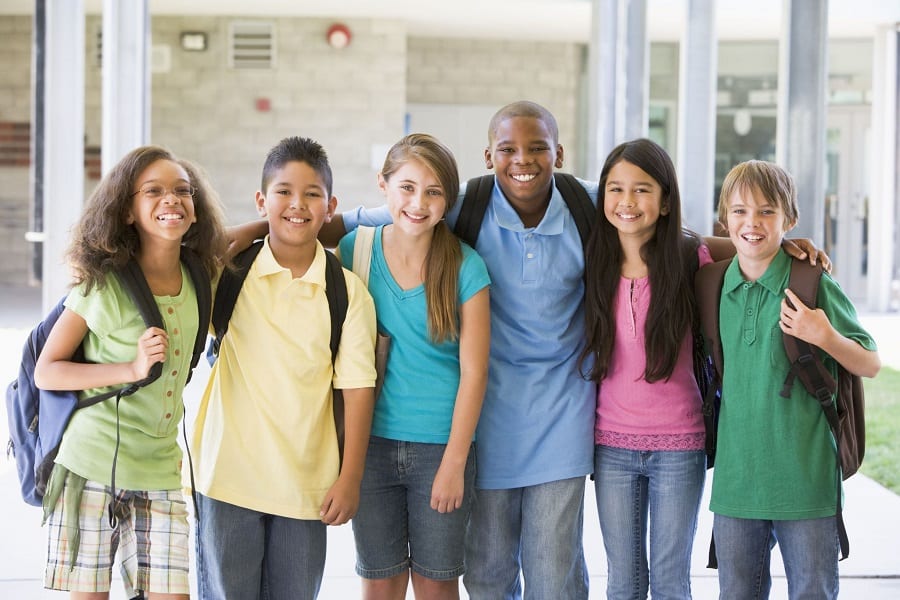
 According to American Adoption News, “A recent study from the Institute of Family Studies reveals that transracial adoptions have increased by 50 percent over the last decade.” This rise in transracial adoptions appears to be due to a change in perspective from one of which “race-matching” with adoptive parents was recommended by adoption agencies to a more current popular opinion that transracial adoption can be a great way to build a family…and it definitely is.
It is clear that transracial adoption can be a beautiful, meaningful and enriching experience for both the adoptive family and adopted child, but it is also important to keep in mind that specific issues related to differences in race may arise throughout the child’s lifespan, which will need to be addressed in a sensitive and caring way. More specifically, the Evan B. Donaldson Institute found that transracially adopted children face challenges in coping with being “different;” they may struggle to develop a positive racial/ethnic identity; and a key life skill for transracially adopted children is the ability to cope with discrimination.
Despite these challenges though, there are ways that adoptive parents can help their adopted child cope with these challenges and develop a positive racial/ethnic identity. More specifically, The Iowa Foster & Adoptive Parents Association recommends that children living in transracial homes have parents who recognize their need to know their cultural roots, which can be achieved by providing the following:
According to American Adoption News, “A recent study from the Institute of Family Studies reveals that transracial adoptions have increased by 50 percent over the last decade.” This rise in transracial adoptions appears to be due to a change in perspective from one of which “race-matching” with adoptive parents was recommended by adoption agencies to a more current popular opinion that transracial adoption can be a great way to build a family…and it definitely is.
It is clear that transracial adoption can be a beautiful, meaningful and enriching experience for both the adoptive family and adopted child, but it is also important to keep in mind that specific issues related to differences in race may arise throughout the child’s lifespan, which will need to be addressed in a sensitive and caring way. More specifically, the Evan B. Donaldson Institute found that transracially adopted children face challenges in coping with being “different;” they may struggle to develop a positive racial/ethnic identity; and a key life skill for transracially adopted children is the ability to cope with discrimination.
Despite these challenges though, there are ways that adoptive parents can help their adopted child cope with these challenges and develop a positive racial/ethnic identity. More specifically, The Iowa Foster & Adoptive Parents Association recommends that children living in transracial homes have parents who recognize their need to know their cultural roots, which can be achieved by providing the following:
- Interacting with people of your child’s race – forming friendships with people of all cultures.
- Living in a diverse, integrated neighborhood.
- Recognizing multiculturalism as an asset and something to be valued.
- Seeking out mentors within your child’s culture - for yourself and for your child.
- Choosing integrated schools that offer unbiased educational materials.
- Standing up to racism and discrimination - If discrimination happens, talk to your child and validate that bad things like this do happen and they do hurt; tell your child he or she does not deserve to be treated that way, noting how good of a person he or she is; tell your child that nobody has the right to say these things, and that the person being hurtful does not really know the child; if it is an adult discriminating against your child, you will need to step in and address this for the child; and if it is another child discriminating against your child, give your child phrases to say in these circumstances.
- Providing the appropriate hair and skin care for your child.
- Making your home a bicultural home – this can be done by in a variety ways such as displaying art from various cultures; creating crafts/art from various cultures; creating a book about your child’s country and culture; displaying maps or flags of your child’s country; planning a vacation to your child’s country; playing games and listening to music from various cultures; visiting libraries to learn more about your child’s culture and other cultures; visiting cultural museums; learning a new language as a family; purchasing clothing of your child’s culture; making food that reflects your child’s culture and various cultures as the norm in your home; and celebrating holidays that are significant to his/her culture.
- Talking about race and culture often.
- Going to places where your child is surrounded by people of his/her same race and culture.
- Swinging too much towards only talking about differences
- Accepting racial discrimination as a reason for underachievement or bad behavior
- Overindulging the child out of fear of being seen as inadequate