 (1).jpg?language_id=1)
Course Description
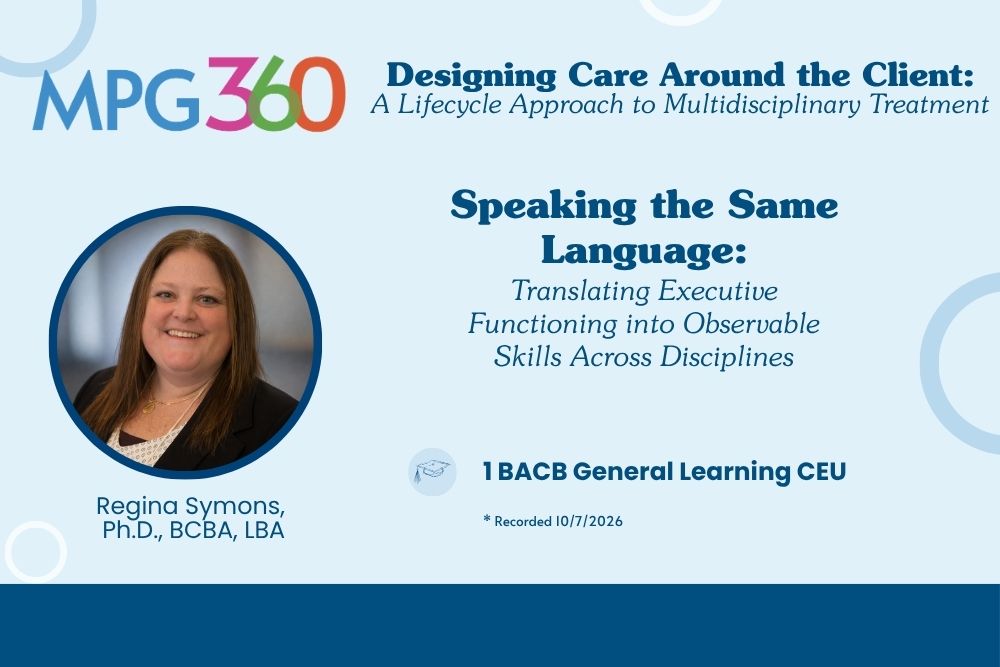
Executive functioning (EF) is widely recognized as essential to success across academic, social, vocational, and daily living contexts. Yet it remains one of the most inconsistently defined constructs across disciplines. Professionals in psychology, education, and behavior analysis often use the same terminology to describe different skills or different terminology to describe the same behavioral challenges, creating barriers to effective assessment, communication, and coordinated treatment planning.
This presentation will also review common limitations of norm-referenced and rating-scale assessment tools, and explore how criterion-referenced approaches can provide more actionable data for intervention design and interdisciplinary collaboration. The presentation will briefly highlight preliminary validation and experimental findings from a criterion-referenced executive functioning assessment tool developed to support the development of treatment-plan objectives. Participants will examine how broad EF concerns, such as “poor organization,” “lack of self-regulation,” or “difficulty initiating tasks,” can be reframed into specific behavioral repertoires across domains, including inhibition, working memory, cognitive flexibility, planning, task initiation, and self-monitoring.
Using real-world examples from school, home, and clinical settings, attendees will learn how executive functioning difficulties present in everyday tasks, how similar outcomes may reflect different underlying skill deficits, and why this distinction is critical for effective treatment. The presentation will also review common limitations of norm-referenced and rating-scale assessment tools, and explore how criterion-referenced approaches can provide more pinpointed results for intervention design and interdisciplinary collaboration.
By establishing a shared language around executive functioning, professionals can improve assessment accuracy, align treatment priorities, and design more cohesive supports across settings and stages of development.
Learning Objectives
- To identify common barriers created by inconsistent definitions of executive functioning across disciplines and describe how these barriers affect assessment, collaboration, and treatment planning.
- To operationally define executive functioning concerns to understand the specific behavioral repertoires across domains such as inhibition, working memory, cognitive flexibility, planning, task initiation, and self-monitoring.
- To identify how criterion-referenced executive functioning assessment can lead to more individualized results for developing treatment plan objectives and supporting interdisciplinary collaboration.